
Before a donor meeting early in my career, someone offered blunt advice: Don’t show up and throw up.
In other words: don’t walk into the room, assume you know what the donor cares about, deliver a monologue about your programs, and keep talking until you’ve diluted your own case.
It happens more often than we would like to admit. We talk ourselves out of a gift.
When we are preparing to make a meaningful ask, nerves take over. We over-explain. We over-justify. We fill silence because silence feels risky (and there are many good things to share).
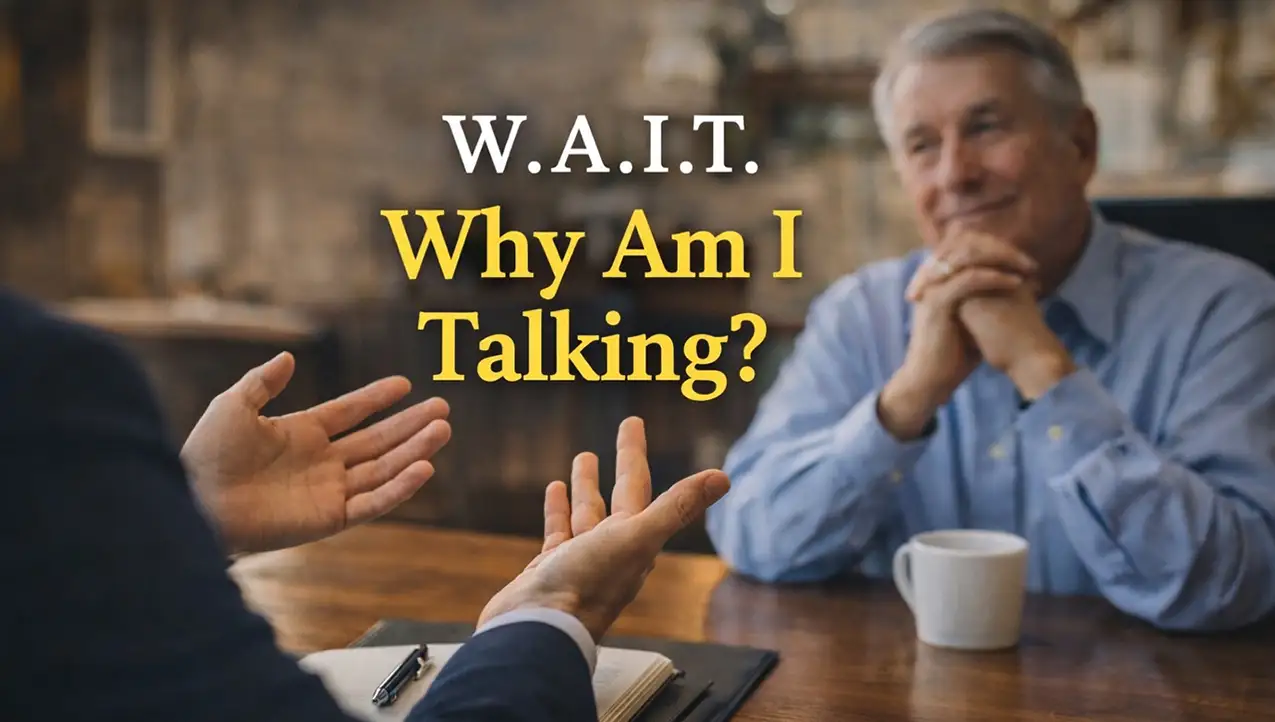
If you catch yourself talking too much, use a simple internal tool: W.A.I.T. — Why Am I Talking?
Silence does not have to be a threat. It can be a strategy.
Why Listening Wins
The donor meeting is not a presentation. It is discovery. When donors speaks, you learn:
- What truly motivates them
- Whether the timing is right
- Where your mission intersects with their priorities
- Whether the proposed amount aligns with their capacity.
None of that emerges if you dominate the conversation.
Your role is to guide, ask thoughtful questions, and connect what you hear back to the mission. The more the donor talks, the more precise — and confident — your ask can become.
Managing the Two-Person Meeting
What if you bring a colleague and they overtake the conversation or veer off strategy?
Avoid this altogether by agreeing in advance who will lead which portions of the discussion. Establish a subtle signal — a shift in posture, a dropped pen, or a brief interjection — to recalibrate if necessary.
A Practical Exercise
Listening is a discipline that improves with practice.
At your next event, introduce yourself to someone new. Ask questions. Resist the impulse to redirect the conversation back to yourself unless invited. Notice how much more you learn — and how much stronger the connection becomes.
The strongest conversations for a gift are not driven by persuasion, but by insight.
Insight begins when you stop talking.